Guide · 7 min read · · by Arjun Jhukal
Building a marketplace like Daraz: what it really takes
A marketplace looks like a store. Underneath, it is five hard problems. Here they are.
Daraz made shopping online normal in Nepal. Many founders now want something similar — but smaller and sharper. A marketplace for Pokhara's shops. One for handicrafts from Bhaktapur. One for every electronics shop on New Road. One for a trade association bringing its members online together.
A marketplace looks like a normal online store. Shoppers see products, a cart and a checkout. But underneath, it solves five problems a normal store never has. This guide explains each one in plain words, so you know what you are really building — and what to ask anyone who offers to build it.
What is a multi-vendor marketplace?
A multi-vendor marketplace is a website where many independent shops (vendors, or sellers) list products, and shoppers buy from all of them in one place. You, the platform owner, usually do not own the stock. You own the site, the rules and the customers' trust, and you earn a commission on each sale.
Compare that with a normal online store, which has one owner, one stock list and one bank account. The moment a second seller joins, every simple question gets hard: whose stock is this, who gets paid, who refunds, and why is one shop always on top?
1. Sellers who are not you
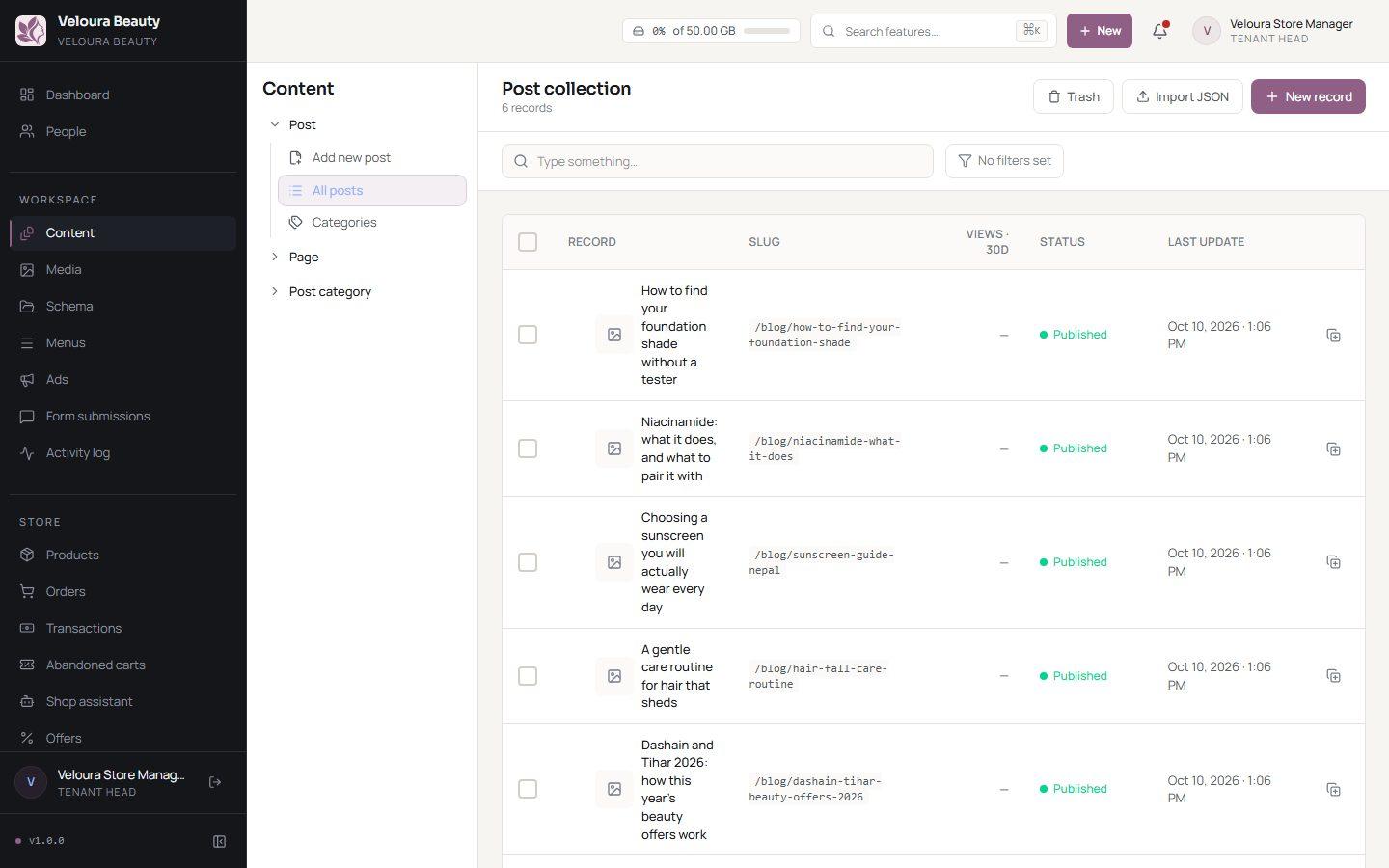
Shops must be able to sign up, wait for your approval, and then manage their own products and orders — without ever touching your settings. That needs a separate, smaller dashboard for sellers.
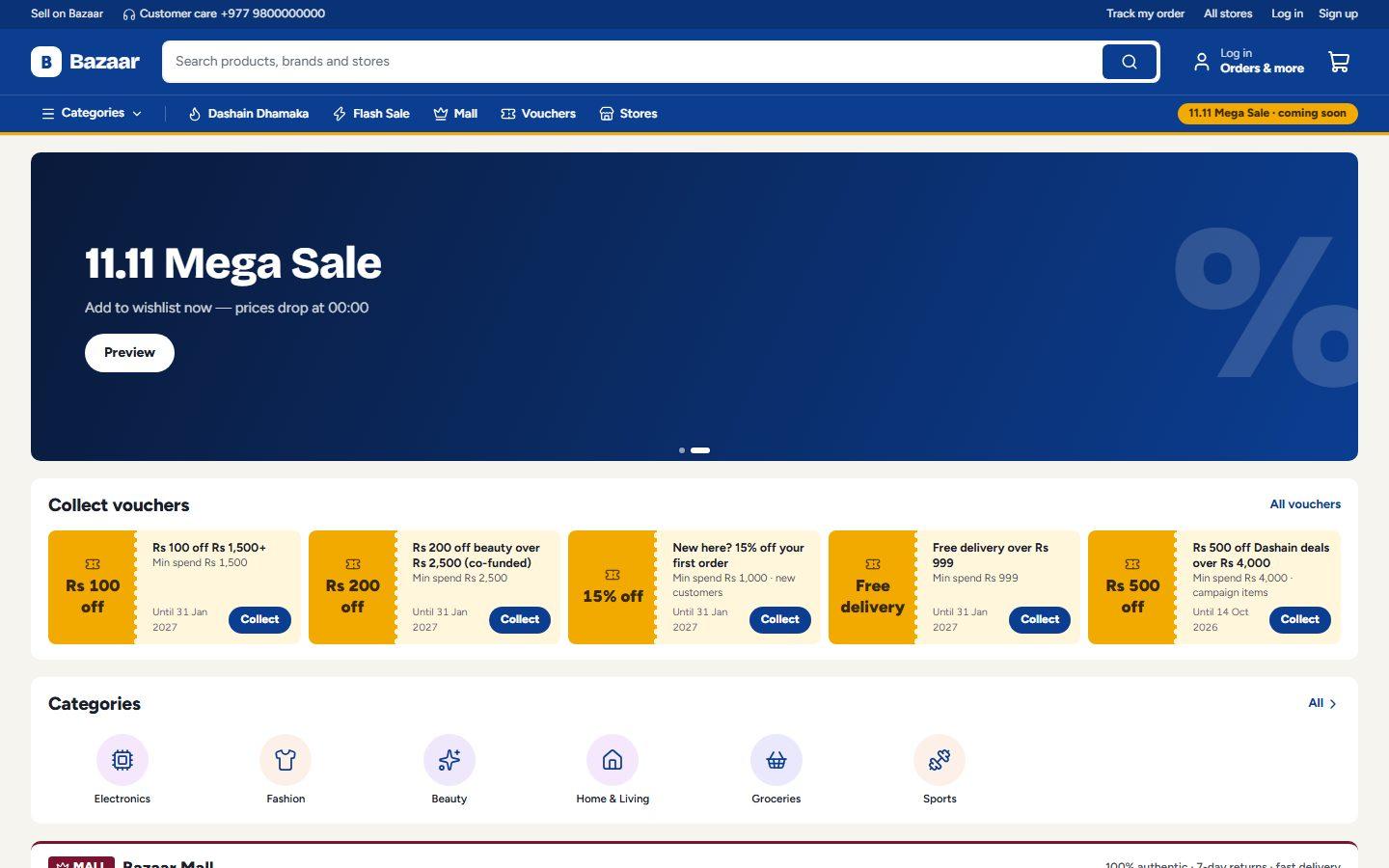
In Bazaar, a shop fills one form and waits. You check them and approve them. They get a trimmed dashboard to add products and see their own orders. They never see your settings, your domains, your SEO or another seller's sales. That separation is handled by roles, so a mistake by one seller cannot break the whole site.
2. One cart, many shops
A shopper buys a kurta from one shop in Asan and shoes from another in Kalimati, in one checkout. Behind the scenes that must become two orders, each packed and shipped by a different seller, from one payment.
This sounds simple. It is not. If one seller cancels, only their part is refunded. If one parcel arrives late, only that seller's order is marked late. The cart groups items by seller so the shopper understands what is coming from where. This is the core of the multi-seller marketplace feature.
3. Money: commission and payouts
The safest model in Nepal is that the platform collects everything — by eSewa, Khalti or cash on delivery — then pays each seller on a fixed day, minus commission. Bazaar pays out weekly.
That needs a proper ledger each seller can see. A ledger is a running record of every sale, fee, refund and payout, written once and never edited. Without it, every payout turns into an argument over a spreadsheet. With it, a seller can check their own numbers before they call you.
Decide your commission, payout day and refund rule before you invite a single seller. Changing money rules after sellers join is the fastest way to lose their trust.
4. Fair ranking
If the same shop is always on top, other sellers leave, and soon you have a store with one seller and a big empty building. A fair marketplace:
- Ranks products by how well they actually sell.
- Smooths the score so a new shop with two great reviews is not buried under an old shop with hundreds.
- Limits how many spots one seller can take on a page — in Bazaar, no more than three.
- Never secretly favours the owner's own house store.
5. Discounts that know who pays
Imagine a Dashain sale across the whole site, plus a seller's own coupon, plus a platform voucher for first-time buyers — all on one order. Who paid for each rupee of discount?
If the platform ran the voucher, the seller should not lose money for it. If the seller ran their coupon, the platform should not pay for it. The system must record who funded each discount, so seller payouts stay correct. Bazaar lets you run campaigns that sellers opt their products into, while still allowing each seller their own coupons.
Paid ads, without losing trust
Selling featured spots is how marketplaces earn beyond commission. In Bazaar, a seller pays a flat daily price for a featured slot. Keep those slots clearly labelled as featured and separate from normal ranking, and shoppers keep trusting your results. Mix them in secretly and shoppers learn that the top result is just whoever paid.
A flat daily price is also easy for a small seller to understand. A shop in Pokhara can feature its new jackets for the three busiest days before Dashain and know exactly what it spent, without learning a complicated bidding system.
Payments, COD, guest checkout and charts
Nepali shoppers pay with eSewa, Khalti and cash on delivery. A marketplace needs all three, plus COD limits you set, plus guest checkout — buying without making an account — so a first-time shopper from Biratnagar does not give up at a sign-up form. Read how wallet payments work for the details of verification.
Because the platform collects the money, it must be strict: an order is paid only when the wallet confirms it, and COD orders become money only when the courier hands the cash over. Only then does the seller's share appear in their ledger. That order of events stops you paying a seller for a parcel the customer refused.
You also need to see the whole marketplace: sales, top categories, which sellers are growing. Each seller needs to see only their own sales, views and best products. Both come from the analytics dashboard, and both match the orders exactly.
A mini case story: one market, many shops
Think of a group of New Road electronics shops that want one site. Each shop already sells phones and laptops over the counter. On Bazaar, each one signs up and is approved. Their products sit side by side, ranked by real sales, so the shop with the best prices and service rises — not the one with the loudest owner. A shopper buys a phone from one shop and a cover from another in one cart, pays once with Khalti, and each shop gets its own order. Every week, each shop is paid from a ledger it can read.
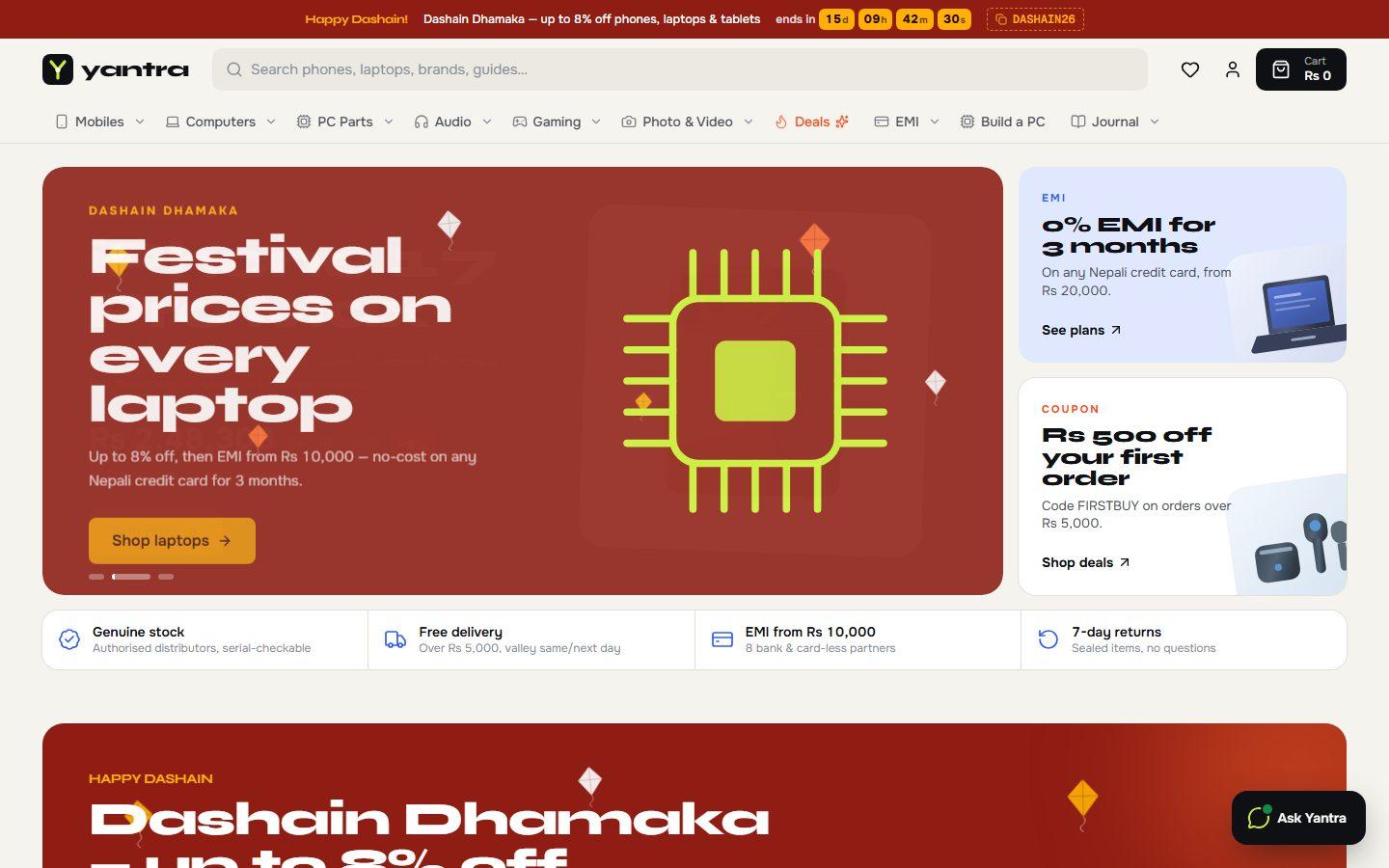
If one of those shops later wants its own branded site with EMI and a PC builder, that is Yantra, on the same CMS.
Build or buy, and how long it takes
Building all of this from zero takes many months, and most of that time goes into the boring, risky parts — money splitting, refunds, ranking — that shoppers never see but sellers notice instantly when they go wrong.
Bazaar already does every part above, on the same Next CMS as my other stores. Its back end is built with Fastify and Node.js, and the shop front with Next.js. So the work becomes your brand, your rules and your first sellers.
What drives the cost of a marketplace is mostly how far your rules differ from the standard ones: a special commission per category, central delivery instead of per-seller shipping, unusual payout schedules, or a design drawn from scratch. The more you can start from what already works, the less you pay and the sooner you open. For the wider picture, read what a website costs in Nepal.
With Bazaar, a launch usually follows four steps:
- Agree the rules — commission, payout day, COD limits, launch categories.
- Put your brand on — name, colours and homepage built from blocks.
- Onboard the first sellers — so the site never opens empty.
- Launch and grow — campaigns, featured slots and new categories.
Starting from Bazaar, that is weeks, not months. The slowest step is usually finding and loading the first sellers, not the software.
Common mistakes when launching a marketplace
- Opening with too few sellers. An empty marketplace looks dead. Launch with enough shops to fill your main categories.
- Paying sellers from a spreadsheet. It works for a month, then the disputes start.
- Letting one seller dominate. Cap spots per page from day one.
- Mixing ads with ranking. Label every paid slot.
- Too many categories at once. Start narrow and win one niche first.
Questions to ask a developer
- Does one cart create a separate order for each seller?
- Can sellers see their own ledger and payouts?
- How is ranking decided, and can any one seller take over a page?
- When a site-wide sale and a seller coupon both apply, who pays for what?
- Can a seller ever see another seller's data?
- Are eSewa, Khalti and COD with limits included?