Guide · 10 min read · · by Arjun Jhukal
How much does a website cost in Nepal? What you are really paying for
Two quotes for "a website" can differ ten times. Here is what actually moves the price, so you can compare quotes properly.
Ask five developers in Kathmandu what a website costs and you will get five very different numbers. That is not because someone is cheating you. "A website" can mean a three-page brochure for a tailoring shop, or a store that takes eSewa payments, tracks stock for every size and sends the owner a WhatsApp message for every order. Those are different jobs, like the difference between building a tea stall and building a hotel.
This guide starts with typical 2026 price ranges, so you know the ballpark. Then — more usefully — it explains what you are paying for, in plain words, so you can read any quote — mine or anyone else's — and know whether it is fair. At the end there is a checklist and a list of questions to ask before you pay anyone.
Website prices in Nepal at a glance (2026)
These are the ranges you will see on quotes from freelancers and agencies in Kathmandu. They are not a price list — your project can sit anywhere in its range, or outside it — but they tell you whether a quote is in the normal zone.
- Simple company or brochure site (5–8 pages, ready-made theme): NPR 15,000–50,000. What a NPR 40,000 site includes, line by line, is in a WordPress website for NPR 40,000 vs NPR 1,00,000.
- Custom-designed business site (own design, block library, SEO set-up): NPR 80,000–1,50,000.
- News portal: NPR 60,000–2,00,000, depending on authors, categories and traffic.
- Booking or enquiry site (travel, trekking, events): NPR 80,000–2,00,000.
- Ecommerce website with eSewa, Khalti and COD: NPR 1,00,000–3,00,000 on WordPress/WooCommerce; NPR 2,50,000–6,00,000 or more for a custom-built store.
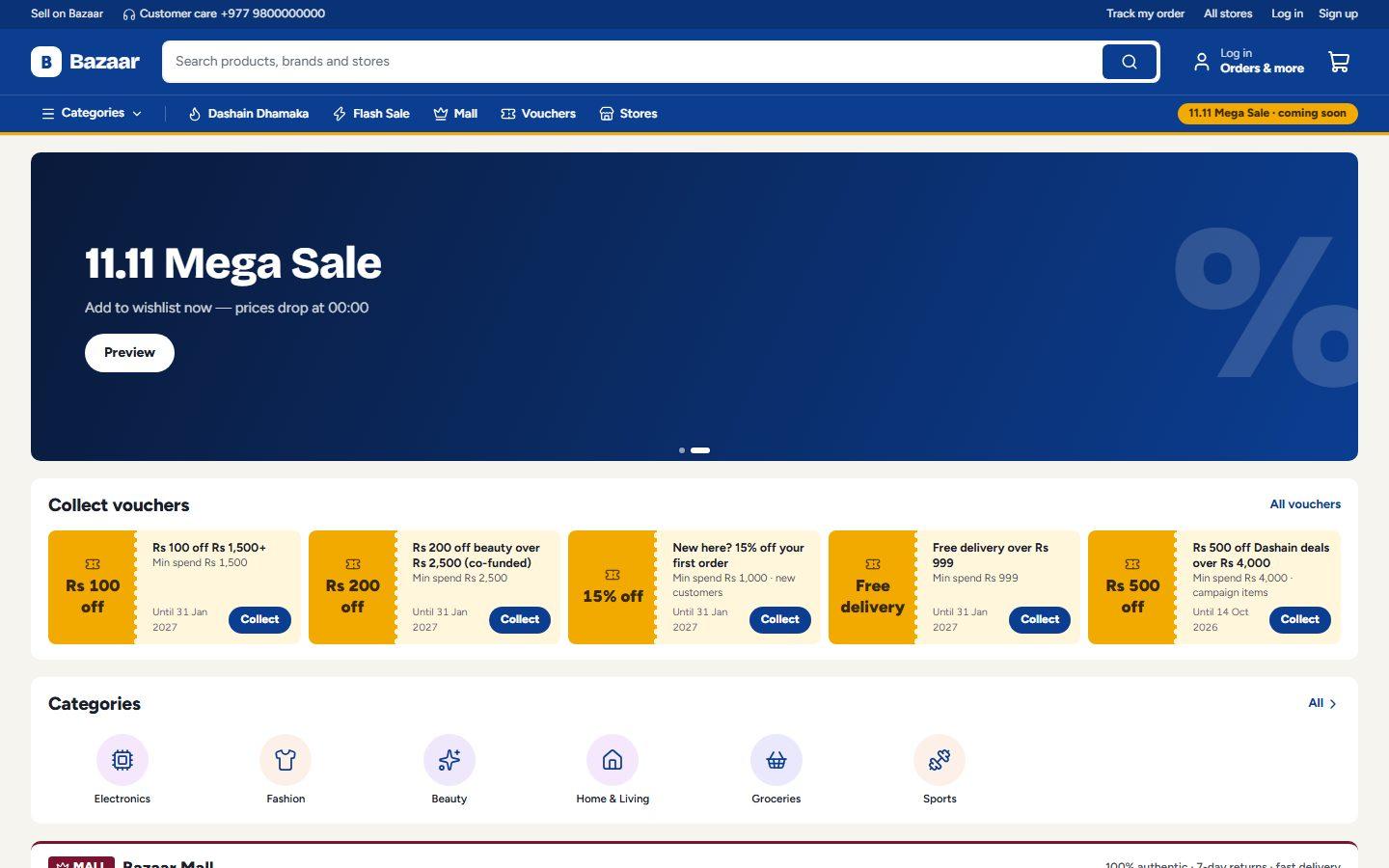
- Marketplace, LMS or multi-tenant platform: NPR 5,00,000 and up when built from zero; much less when started from working software like Bazaar or the Institute LMS.
And the running costs that come on top:
- Domain: .com.np free for registered businesses (how to register one); .com about NPR 1,500–2,500 a year.
- Hosting: about NPR 3,000–12,000 a year for shared hosting; NPR 1,500–6,000 a month for a VPS or cloud plan for busy stores and portals.
- Maintenance: about NPR 3,000–15,000 a month for updates, backups and small changes.
- Premium plugins or themes (WordPress): often USD 50–100 each a year, about NPR 7,000–14,000.
- Copywriting: about NPR 1,000–4,000 per page if someone writes it for you.
- SEO after launch: about NPR 15,000–60,000 a month for an ongoing retainer — see SEO services in Nepal.
- eSewa and Khalti merchant setup: about NPR 25,000 and NPR 30,000, paid to the wallets.
The design and build process behind those numbers is explained in website design in Nepal. For WordPress specifically, see WordPress website cost in Nepal.
Why website prices in Nepal vary so much
There is no fixed market rate for websites, in Nepal or anywhere. One quote might come from a student using a free theme. Another might come from an agency with designers, writers and a support team. A third might come from a developer who starts from software that already runs live businesses. All three can be honest. They are simply selling different things.
The trick is to stop comparing the final numbers and start comparing what is inside each quote. Once you know the six things below, you can line quotes up side by side and see which one actually does the job you need.
1. What the website has to do
This is the biggest factor by far. Roughly, websites fall into four groups, and each step up adds real work:
- Show information — who you are, what you do, how to contact you. A Thamel guesthouse that wants a nice page and a map. The cheapest kind.
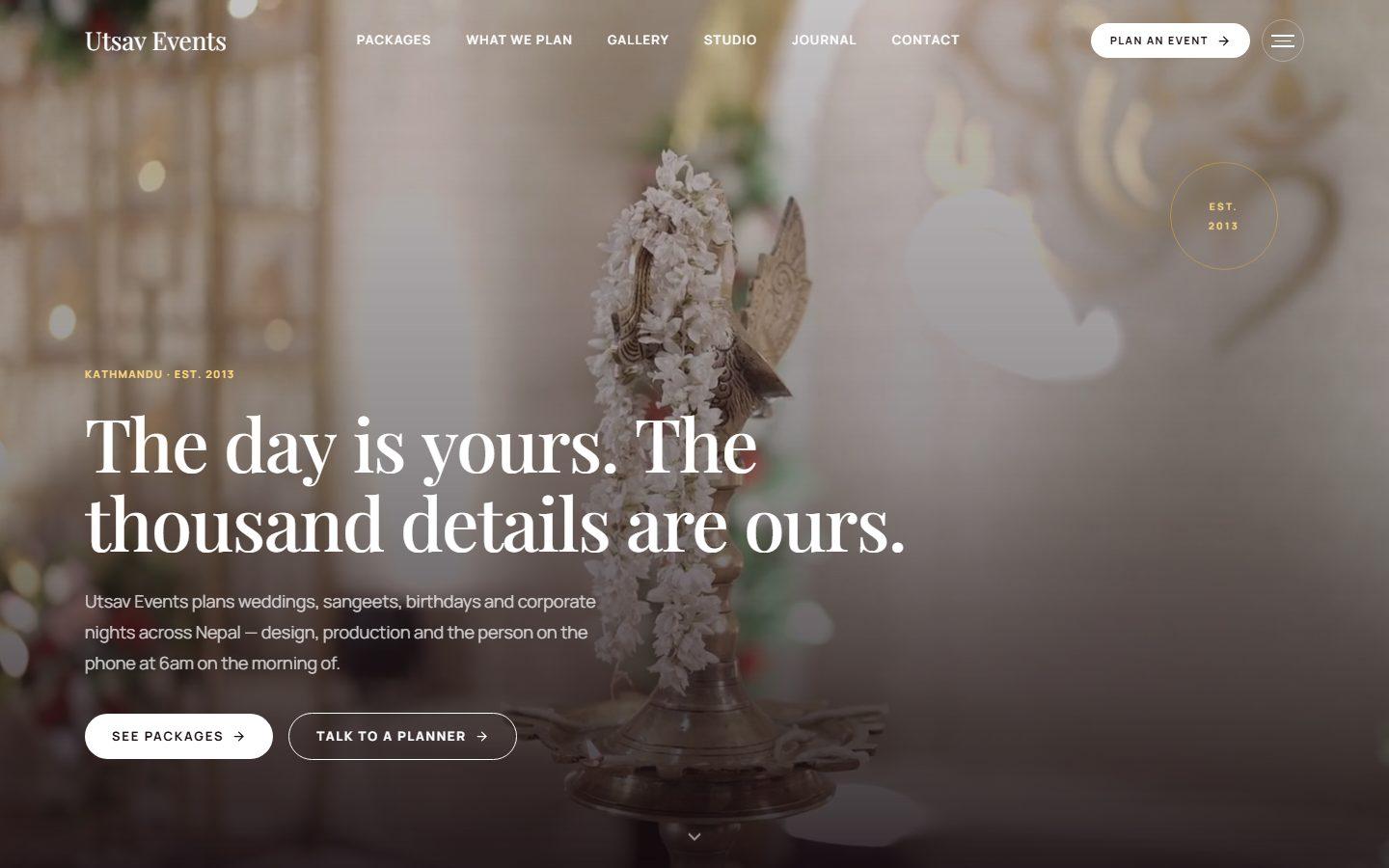
- Collect enquiries or bookings — a form with dates, guests or group size. A wedding planner like Utsav Events or a Pokhara trekking agency like Kora Travel. These need booking enquiries that land as complete leads, not "price?" messages.
- Sell online — products, a cart, eSewa and Khalti payments, orders and stock. See how to start an online store in Nepal.
- Run a platform — many sellers, many schools, many creators. A marketplace like Daraz or an LMS for colleges.
Why does each step cost more? Because each one adds things that must be built and tested. Payments must be tried with real money. Orders need a dashboard where your staff can see and update them. Platforms need careful rules about who can see what — a seller on a marketplace must never see another seller's orders.
2. A ready-made base, or built from zero
Building every piece from an empty folder is slow, and slow means expensive. A login system, an image uploader, a page editor, a sitemap — none of these are special to your business, but they all take days to build well.
Starting from software that already works cuts weeks off a project. Every site I build starts from Next CMS, the same system that runs Chhaka.com, a live cricket site with thousands of pages. A CMS (content management system) is simply the back office of a website, where you edit text, photos and products. If you are not sure what that means, read what a CMS is.
So always ask: "What does this start from?" If the answer is "from nothing", expect a longer timeline. If the answer is a cheap theme with ten plugins, expect problems later.
3. Design: a theme, or made just for you
A theme with your logo and colours is cheaper than a design drawn just for your brand. Neither is wrong. A plumber in Lalitpur does not need a custom design; people want his phone number, fast.
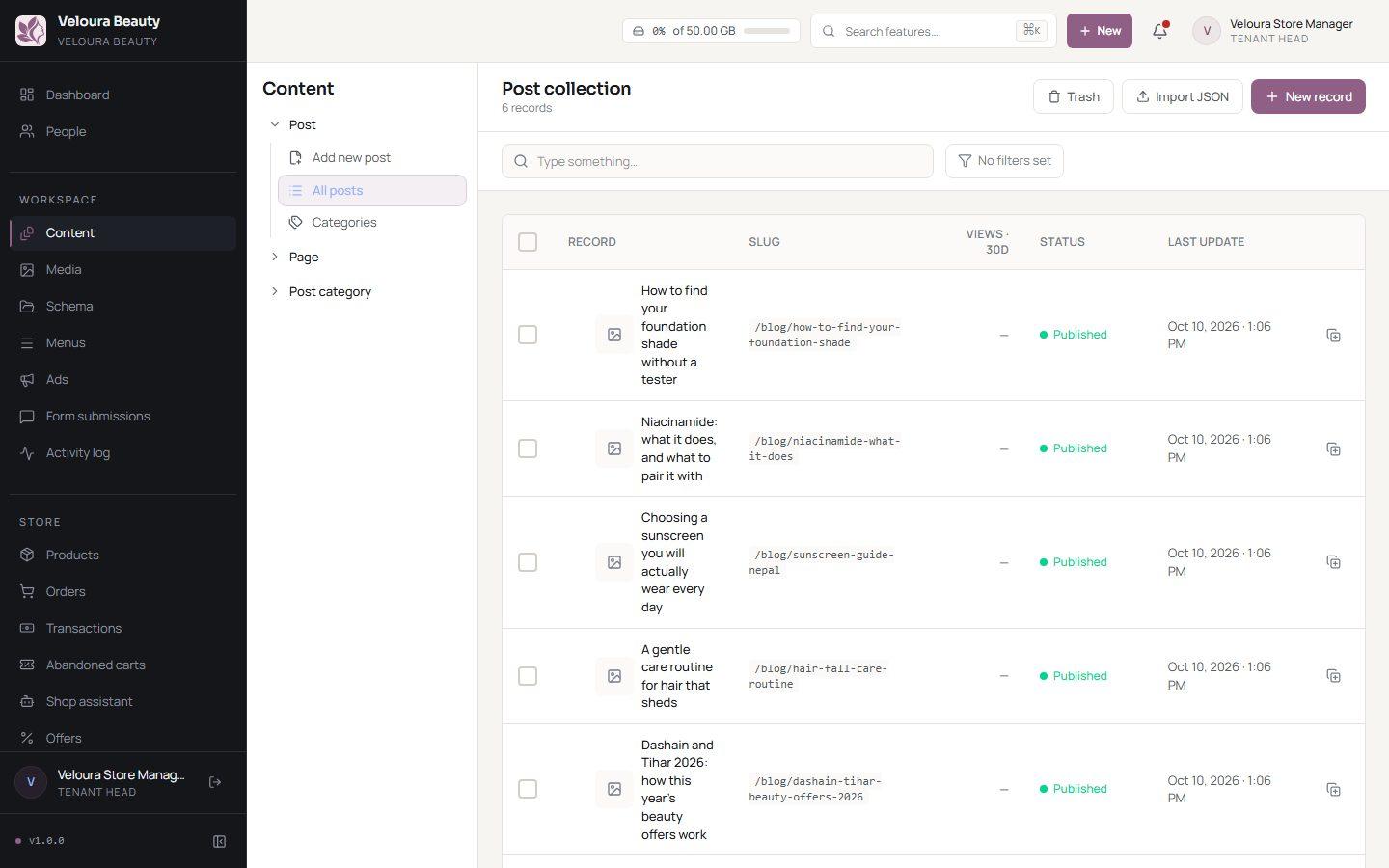
Custom design matters more when your brand is the product. A streetwear label, a skincare shop, a wedding planner. In those businesses the look of the site is what makes someone trust you enough to pay. That is why stores like Kapda Studio and Veloura Beauty keep their features but change the colours, type and photos for each brand.
4. Content and photos
Someone has to write the pages and shoot the products. This is the part owners forget, and it is often what delays a launch by weeks.
- You provide everything — text, logo, product photos, prices. The price drops, but the launch waits for you.
- The developer loads your catalogue — you send a spreadsheet and photos; they enter and tidy it so filters work.
- The developer writes SEO content — articles like this one, written to bring visitors from Google. More work, but it is the part that brings customers over time.
Start collecting content today, before you even pick a developer. A folder with your logo, 20 good product photos, your About text and your delivery rules will save more time than any other step.
5. Features that add real work
Some features sound small but take serious time to build properly. When a quote is surprisingly low, check whether these are really included:
- Online payments — eSewa, Khalti and cash on delivery, with each payment confirmed by the wallet. Read how wallet payments work.
- Sizes, colours and stock — every combination tracked separately. See variants and filters.
- Order alerts — a WhatsApp alert to your phone for every order or booking.
- A real order record — payments and refunds kept like an accountant would, in an orders and ledger system.
- Two languages — a dashboard your staff can use in Nepali and English.
- Staff accounts — roles and an activity log so you know who changed a price.
6. Hosting, domain and upkeep
A website does not end on launch day. There are three running costs to plan for.
- Domain — the address, like yourshop.com.np. A .com.np domain is free for businesses registered in Nepal, applied for through register.com.np (run by Mercantile). A .com domain is a small yearly cost.
- Hosting — the computer that serves your site to visitors. A yearly cost that grows with traffic and features. A simple static site costs little to host; a busy store with a database costs more.
- Payment wallet setup — if you sell online, eSewa charges about NPR 25,000 and Khalti about NPR 30,000 to open a merchant account (2026 figures — confirm the current fee with each wallet before you budget). That money goes to the wallets, not to your developer. See what it costs to accept eSewa and Khalti.
- Upkeep — updates, backups, small changes and fixes. Ask what is included after launch.
A cheap site with no support often becomes expensive the first time something breaks during your Dashain sale. Next CMS, for example, takes weekly automatic database backups — ask any developer what their backup plan is.
A mini case story: one base, many businesses
Here is how a ready-made base changes a project. The same CMS sits under a cricket news site, a clothing store, an electronics store with EMI, an event planner and a multi-seller marketplace. Each one needed different things — sizes for clothes, a PC builder for electronics, guest counts for weddings — but none of them needed a new login system, a new page editor or a new sitemap.
For the owner, that means the money goes into the parts that make their business different, not into rebuilding the basics. It also means the basics are already tested by real visitors, which is worth more than any promise.
How long does a website take?
Time and cost move together, so it helps to know rough timelines. These assume your content is ready:
- A simple company site — days to a couple of weeks.
- A booking or enquiry site — a few weeks, depending on how many packages and photos you have.
- An online store — a few weeks on working software, often longer while you wait for eSewa and Khalti merchant approval.
- A marketplace or LMS — from zero, many months. Starting from Bazaar or the Institute LMS, the work becomes setup, branding and your rules.
Common mistakes when buying a website
- Choosing on price alone. The cheapest quote often leaves out payments testing, SEO or support.
- No editing access. If every new photo needs a developer, small changes become slow and costly. Look for a block page builder.
- Forgetting Google. A site with no titles, descriptions or sitemap is invisible. The SEO toolkit should be part of the build, not an extra.
- Not owning your content. Make sure your products, pages and customers can be exported if you ever move.
- Too many plugins. A WordPress site with fifteen plugins slows down and breaks on updates. WordPress is great for the right job; it is not great at everything.
Checklist: compare two quotes side by side
- Does each quote include the same pages and features?
- Are payments included and tested with real money?
- Can my team edit pages and products without a developer?
- Is SEO set up — titles, descriptions, sitemap, speed on a phone?
- Who sets up the domain and hosting, and who pays for them each year?
- What support is included after launch, and for how long?
- Can I see a live site this developer built?
Questions to ask a developer before you pay
- Can my team edit pages without you? (Look for a block page builder.)
- Which payments does it take — eSewa, Khalti, cash on delivery, cards?
- Is SEO set up — titles, sitemap, speed? (See the SEO toolkit.)
- Who owns the code and the content?
- What happens when something breaks after launch?
- What technology is it built on, and can another developer take over? (I build with Next.js, React and Node.js.)
Want a straight answer for your project? Send me what the site must do and I'll reply with a clear quote — no packages you don't need. If a cheaper option like plain WordPress fits better, I'll say so.