In production
Content management system
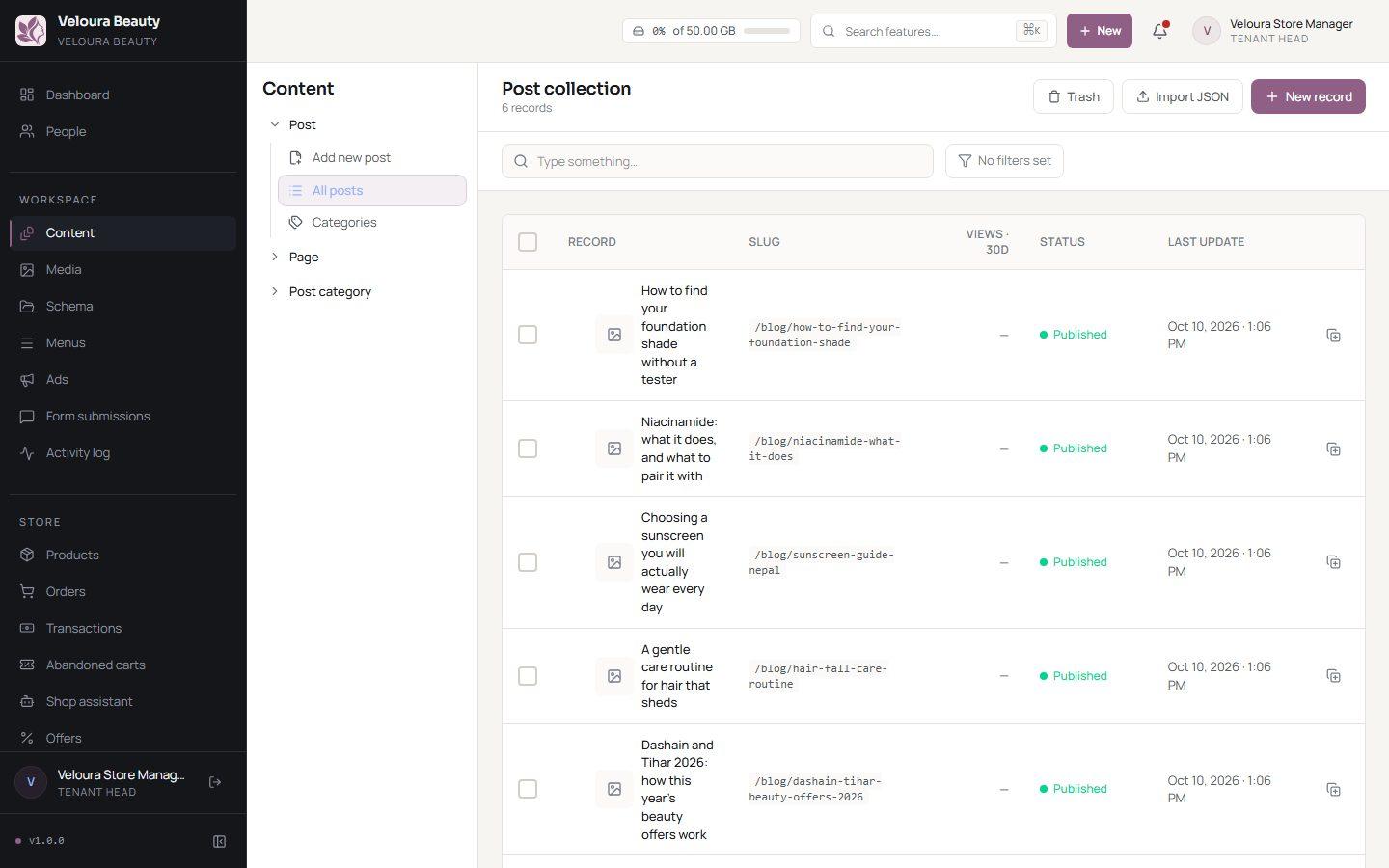
Next CMS
The CMS behind every site here — so your project starts at 80%, not zero.
Request a demo →WordPress developer · Kathmandu · remote worldwide
WordPress is still the right answer for many blogs, news portals and company sites. I build custom themes, fix slow and hacked sites, and automate publishing — including a tool that pulls news feeds and publishes them to WordPress on a schedule. When a project outgrows WordPress, the Next CMS is the next step; I'll tell you honestly which one you need.
The CMS behind every site here — so your project starts at 80%, not zero.
Request a demo →Most WordPress sites in Kathmandu are built the same way: buy a theme, install a page builder, add a plugin for every wish, hand over the login. It looks fine on launch day. Six months later it takes eight seconds to open on a phone, a plugin update breaks the home page, and nobody remembers which of the twenty-three plugins does what.
I build WordPress the other way round. The theme is written for your site, the content your team edits sits in clear fields, and every plugin on the site has a reason to be there. That is slower on day one and much cheaper over the life of the site. I led WordPress front-end work at an agency in Kathmandu and have shipped WordPress sites for a news portal, a construction company, a travel company, a venture-capital firm, a charity, an educational consultancy and an online shop — so the advice below comes from real projects, not from a plugin's sales page.
An agency gives you a team: a designer, a writer, a project manager. A freelance WordPress developer gives you one person who knows every line of your site. For most company sites, news portals and small WooCommerce stores in Nepal, that one person is enough — and you avoid paying for layers you do not use. If your project needs a full team, I will tell you, and I team up with designers and agencies when it does. The longer comparison is in how to hire a WordPress developer in Nepal.
Timelines, assuming your content is ready: a company site in one to three weeks, a news portal or WooCommerce store in three to six. Waiting for photos and text is the most common delay, so start collecting them today.
Every plugin is code someone else wrote, running on your site. I keep the list short. Advanced Custom Fields for editable fields, WooCommerce for shops, Rank Math or Yoast for SEO, LiteSpeed Cache or a host's own cache for speed, Wordfence for security, and All-in-One WP Migration or UpdraftPlus for moves and backups. What I avoid: all-in-one "mega" themes with fifty demos, page builders on sites that need speed, nulled (pirated) premium plugins — the most common way Nepali WordPress sites get hacked — and any plugin that has not been updated in a year.
The price depends on what the site must do, not on the number of pages. A brochure site, a news portal and a WooCommerce store are three different jobs. Premium plugins and themes are billed yearly in US dollars, hosting is yearly, and a .com.np domain is free for businesses in Nepal. The whole breakdown — with a checklist for comparing quotes — is in WordPress website cost in Nepal, and the wider picture in website cost in Nepal.
WordPress is great at publishing. It is less good at things it was not built for: a marketplace with many sellers, a booking engine with deposits, an LMS for many schools, a sports site with thousands of live pages. Those end up as a pile of plugins fighting each other. For that work I build on Next.js and my own Next CMS, which already runs Chhaka.com, a multi-seller marketplace and an LMS. The honest comparison is in Next.js vs WordPress. Sometimes the answer is both: WordPress for editing, with a fast headless Next.js front end.
Almost every WordPress site looks fine on launch day. The difference between a good WordPress developer and a cheap one shows up a year later. Here is how to tell them apart before you pay.
I build both, so this is not a sales pitch for one. Here is when WordPress is the smart choice, when Next.js is, and how to tell.
WordPress for content sites with a modest budget; custom for stores, bookings and anything with complex logic. Read what a CMS is.
Yes. I work directly with businesses in Nepal and abroad, and with agencies that need a WordPress developer on their team. You talk to the person who writes the code.
It depends on what the site must do — a company site, a news portal and a WooCommerce store are different jobs. You get a fixed written quote after a short call. See WordPress website cost in Nepal for what moves the price.
Yes. Slow, broken and hacked sites are a big part of the work. I measure speed on a phone first, then remove what does not need to load, fix caching and images, and clean up plugins.
Yes, with every payment verified on the server before the order is marked paid. You need a merchant account with each wallet first — see eSewa and Khalti merchant account cost.
Only when the client's team already depends on one. For new sites I build a custom theme with editable blocks — it loads faster and breaks less on updates.
Yes — Nepali Unicode fonts tuned for phones, sensible categories, fast archives and optional automated publishing from feeds.
Yes. The domain, hosting, admin login and code are yours, and you get a short video on how to edit the site.
Yes, as a monthly retainer: updates tested on a copy first, restorable backups, security checks and small changes.
Yes. I work remotely for clients and agencies abroad, on Nepal time with overlap for Europe, the Gulf and Australia.
Tell me about the project on WhatsApp or book a call. I'll reply with an honest view of what it takes.